

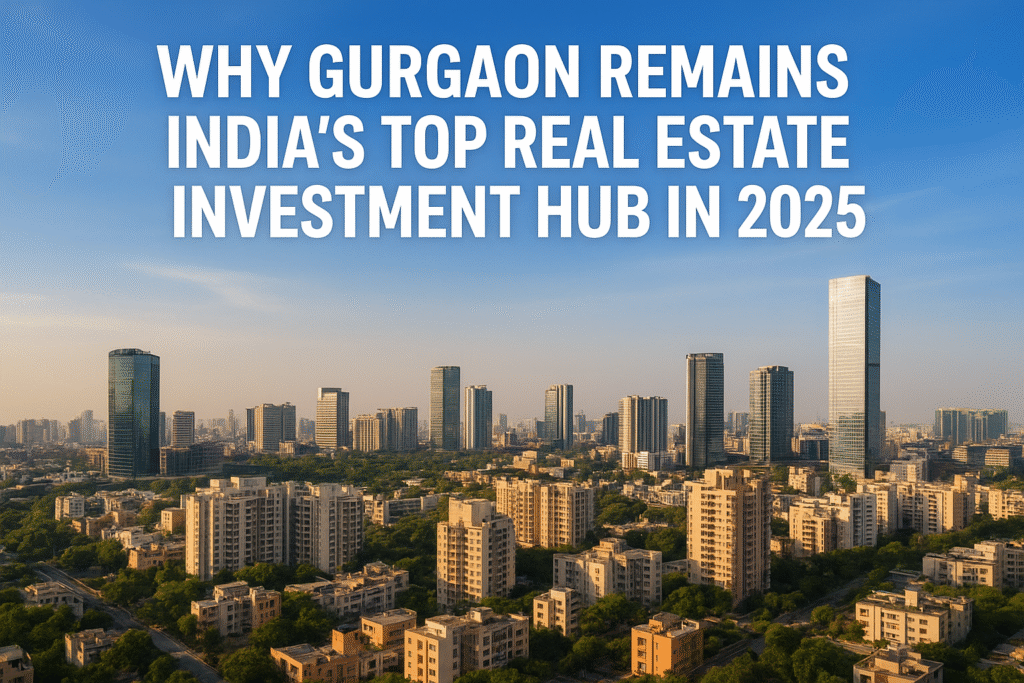
Gurgaon continues to strengthen its position as India’s most promising real estate investment hotspot in 2025. Backed by world-class infrastructure, strong job creation, high rental demand, and modern lifestyle offerings, the city stands out as a future-ready destination for both investors and end-users. Here’s an in-depth look at what makes Gurgaon the No.1 real estate hub.
1. Unmatched Connectivity & Infrastructure Growth
Gurgaon’s biggest advantage lies in its rapidly evolving infrastructure:
Dwarka Expressway is reshaping connectivity between Delhi, IGI Airport, and New Gurgaon, driving massive appreciation in nearby sectors.
Metro expansion—including the new line connecting Millennium City Centre, Cyber City, and Dwarka Expressway—will unlock new residential and commercial demand.
The Southern Peripheral Road (SPR) and NH-48 continue to enhance mobility across the city.
The upcoming Delhi–Gurgaon–Alwar RRTS will further strengthen connectivity and boost future value.
These infrastructure upgrades are not only improving liveability but also opening new micro-markets where property values are rising steadily.
2. Corporate Powerhouse & Employment Magnet
Gurgaon remains one of India’s strongest employment hubs. It houses:
Fortune 500 companies
Global MNCs
Startups and unicorns
IT/ITeS giants
BFSI companies
Large coworking ecosystems
With thousands of professionals migrating each year, demand for both residential and commercial real estate stays naturally high.
Hybrid work trends have also pushed developers to create work-from-home optimized apartments, boosting demand for premium housing.
3. High Rental Yield & Consistent Appreciation
Gurgaon offers one of the best investment returns in India:
Rental yields outperform most NCR cities.
Micro-markets like Dwarka Expressway, New Gurgaon, and SPR have shown strong capital appreciation over the last few years.
Builder floors and low-density housing remain top choices due to privacy, space, and long-term value growth.
This combination of strong rental income and value appreciation makes Gurgaon an ideal location for long-term real estate investment.
4. Premium Lifestyle & World-Class Amenities
Gurgaon has transformed into a modern global city with:
Luxury malls, fine-dining zones, and entertainment hubs
International schools and universities
Multi-specialty hospitals
Golf courses and high-end clubs
Gated communities with signature amenities
The city’s cosmopolitan lifestyle attracts NRIs, HNIs, corporate leaders, and young families seeking premium urban living.
5. Strong Regulatory Framework & Buyer Confidence
The real estate environment in Gurgaon has become far more transparent and secure:
RERA ensures better accountability and timely delivery.
Digitization of land records and e-registration have simplified transactions.
Government-led reforms and infrastructure investments have boosted investor confidence.
This regulatory clarity reduces risk, making Gurgaon a preferred choice for safe real estate investments.
6. Emerging Micro-Markets Driving the Next Growth Wave
Beyond traditional hotspots like Golf Course Road and Cyber City, new areas are now gaining momentum:
Dwarka Expressway sectors
SPR (Southern Peripheral Road)
New Gurgaon (Sectors 82–95)
Sohna Road and South Gurgaon
These locations offer attractive price points and high future appreciation potential as connectivity and city planning improve.
7. Smart & Sustainable Development
Gurgaon is increasingly embracing sustainability:
EV charging-enabled communities
Solar-powered common areas
Green-certified buildings
Improved water management systems
Developers are focusing on eco-conscious architecture, which appeals to modern buyers and ensures long-term value stability.
8. A Stable & Resilient Real Estate Market
Gurgaon’s real estate market remains resilient due to:
Strong end-user demand
Continuous job creation
High NRI investment
Balanced supply across segments
Even during market fluctuations, Gurgaon has consistently shown steady price growth, making it one of the most reliable real estate markets in India.
Conclusion
Gurgaon in 2025 is the perfect blend of connectivity, urban lifestyle, business growth, and regulatory stability. Whether you’re an end-user or an investor, the city offers unmatched potential for long-term capital appreciation and rental returns.