

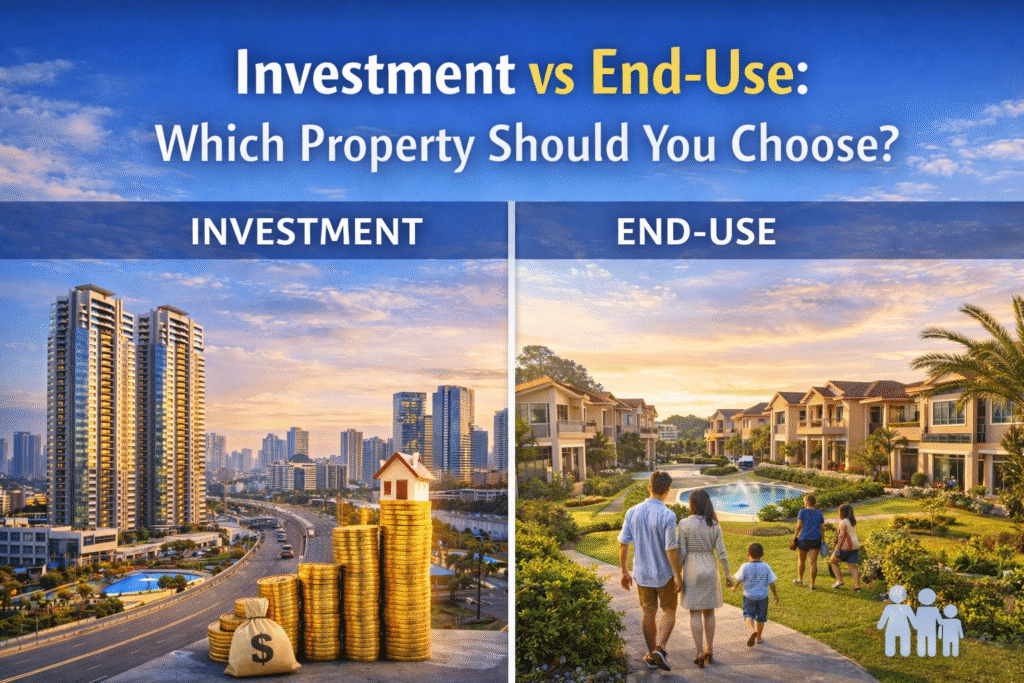
Investment vs End-Use: Which Property Should You Choose?
Buying a property is one of the most important financial decisions you’ll ever make. One of the first questions buyers face is: Should I buy a property for investment or for end-use (self-living)?
Both options offer value—but the right choice depends on your goals, finances, and timeline.
In this SEO-friendly guide, we break down investment vs end-use property, helping you decide what suits you best in today’s real estate market.
What Is an Investment Property?
An investment property is purchased primarily to:
Earn capital appreciation
Generate rental income
Build long-term wealth
The focus is on returns, not personal lifestyle.
Key Features of Investment Properties
Located in high-growth or emerging areas
Strong rental demand
Good connectivity and infrastructure potential
Competitive entry price
High resale liquidity
What Is an End-Use Property?
An end-use property is bought for self-occupation, where comfort, lifestyle, and convenience matter more than short-term returns.
Key Features of End-Use Properties
Proximity to workplace, schools, hospitals
Well-developed neighborhood
Superior amenities and community living
Emotional satisfaction and stability
Long-term personal use
Investment vs End-Use: Key Differences
| Factor | Investment Property | End-Use Property |
|---|---|---|
| Primary Goal | Returns & appreciation | Lifestyle & comfort |
| Location Focus | Upcoming / growth zones | Established areas |
| Holding Period | Medium to long-term | Long-term |
| Emotional Value | Low | High |
| Rental Income | Important | Optional |
| Resale Timing | Market-driven | Need-driven |
Which Property Should You Choose?
Choose an Investment Property If:
Your goal is wealth creation
You already own a home
You want rental income
You can wait 5–10 years for appreciation
You prefer data-driven decisions
Best suited for:
Investors, NRIs, HNIs, second-home buyers
Choose an End-Use Property If:
You want stability and security
You are buying your first home
You value lifestyle and convenience
You plan to live there long-term
You want emotional satisfaction
Best suited for:
First-time buyers, families, working professionals
Can One Property Serve Both Purposes?
Yes—a smartly chosen property can offer both investment returns and end-use value.
Ideal Hybrid Properties:
Located in fast-developing yet livable areas
Near offices, metro, and social infrastructure
Premium gated communities
Projects by reputed developers
Such properties offer:
Comfortable living today
Strong resale and rental potential tomorrow
Key Factors to Consider Before Deciding
1. Budget & Financing
Investment properties often need patience. End-use properties require EMI comfort.
2. Time Horizon
Short-term → Investment
Long-term living → End-use
3. Market Conditions
Bull market favors investors; stable markets suit end-users.
4. Personal Life Stage
Single professionals may invest early, families often prioritize end-use.
Common Mistakes to Avoid
Buying investment property in saturated areas
Choosing end-use homes in poorly connected locations
Ignoring rental demand
Overstretching budget emotionally
Not planning exit or resale strategy
Final Thoughts
There is no one-size-fits-all answer when choosing between investment vs end-use property. The right decision depends on why you’re buying, how long you plan to hold, and what you expect from the property.
A clear understanding of your goals—combined with market knowledge—can help you make a decision that delivers both peace of mind and financial growth.