

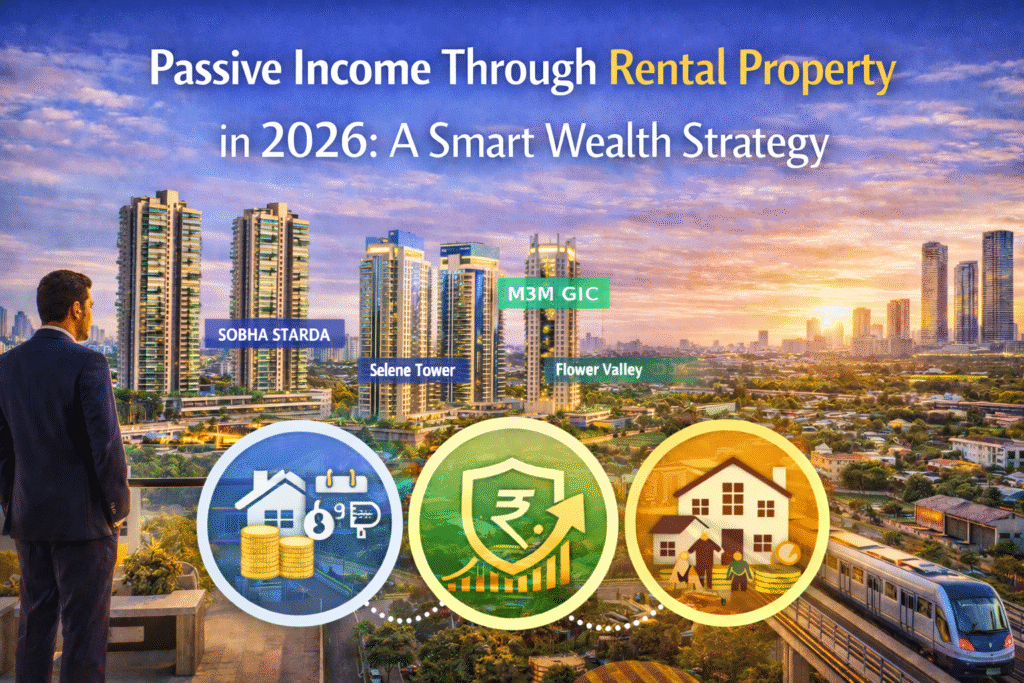
Passive Income Through Rental Property in 2026: A Smart Wealth Strategy
In 2026, passive income through rental property continues to be one of the most reliable and scalable wealth-building strategies in India. With rising urban migration, increasing rental demand, and stable real estate fundamentals, rental income has become a key financial goal for both investors and NRIs.
This blog explains how rental property generates passive income in 2026, why demand is rising, and which types of projects are best suited for long-term rental returns—including options like SOBHA STARDA, M3M GIC, Central Tower Selene Tower Flower Valley KD 3%.
What Is Passive Income Through Rental Property?
Passive income from real estate means earning regular monthly rental income with minimal active involvement after purchasing the property. Once leased, the tenant’s rent:
Covers EMIs (if any)
Generates surplus cash flow
Builds long-term wealth alongside appreciation
In 2026, rental income is no longer just supplementary—it is a core investment objective.
Why Rental Property Is a Strong Passive Income Asset in 2026
1. Rising Rental Demand Across Cities
Key drivers include:
Job mobility & corporate expansion
Higher home prices delaying purchases
Growth of nuclear families
Demand from NRIs, expats & professionals
This ensures consistent occupancy and stable income.
2. Inflation-Protected Income
Rental income increases over time, making it a natural hedge against inflation.
Rents rise with market demand
Property value appreciates simultaneously
Real purchasing power stays protected
3. Monthly Cash Flow + Long-Term Appreciation
Rental property offers dual benefits:
Monthly rental income
Capital appreciation over the years
This combination makes real estate superior to many paper assets.
Best Property Types for Rental Income in 2026
✔ Gated Communities
Higher tenant preference
Better security & amenities
Faster leasing
Lower vacancy risk
✔ Premium & Mid-Segment Apartments
Professionals prefer well-designed apartments with:
Clubhouse & gym
Power backup
Parking & security
✔ Managed & Lifestyle Projects
Projects with professional maintenance attract quality tenants and premium rents.
Rental Yield Expectations in 2026
In major urban and high-demand micro-markets:
Average rental yield: 2.5%–4%
Premium projects & high-demand locations may achieve KD 3% rental yield or higher, depending on timing and leasing strategy
Projects such as SOBHA STARDA, M3M GIC, and Central Tower Selene Tower Flower Valley KD 3% align well with tenant expectations for quality, location, and lifestyle—making them suitable for rental-focused investors.
Why Premium Projects Perform Better for Rentals
Premium developments offer:
Faster tenant onboarding
Better tenant retention
Lower maintenance disputes
Higher perceived value
Tenants are willing to pay more for brand reputation, amenities, and community living.
Who Should Invest in Rental Property in 2026?
Rental property is ideal for:
Salaried professionals seeking passive income
NRIs looking for India-based income
Retirees planning stable monthly cash flow
Investors diversifying beyond stocks
It suits anyone looking for predictable income with asset security.
Key Factors to Maximize Rental Income
To improve returns:
Choose employment-driven locations
Invest in well-connected gated communities
Focus on tenant-friendly layouts
Maintain property professionally
Price rentals competitively
Correct planning can significantly boost rental yield and occupancy.
Rental Property vs Other Passive Income Options
| Asset Type | Stability | Income Consistency | Inflation Protection |
|---|---|---|---|
| Fixed Deposits | High | Fixed | Low |
| Stocks | Volatile | Uncertain | Moderate |
| Mutual Funds | Market-linked | Variable | Moderate |
| Rental Property | High | Regular | Strong |
Rental property stands out as a balanced and secure passive income source.
Final Thoughts
In 2026, passive income through rental property remains a winning strategy for investors who value stability, monthly income, and long-term growth. With strong rental demand, rising urbanization, and premium projects attracting quality tenants, real estate continues to deliver dependable returns.