

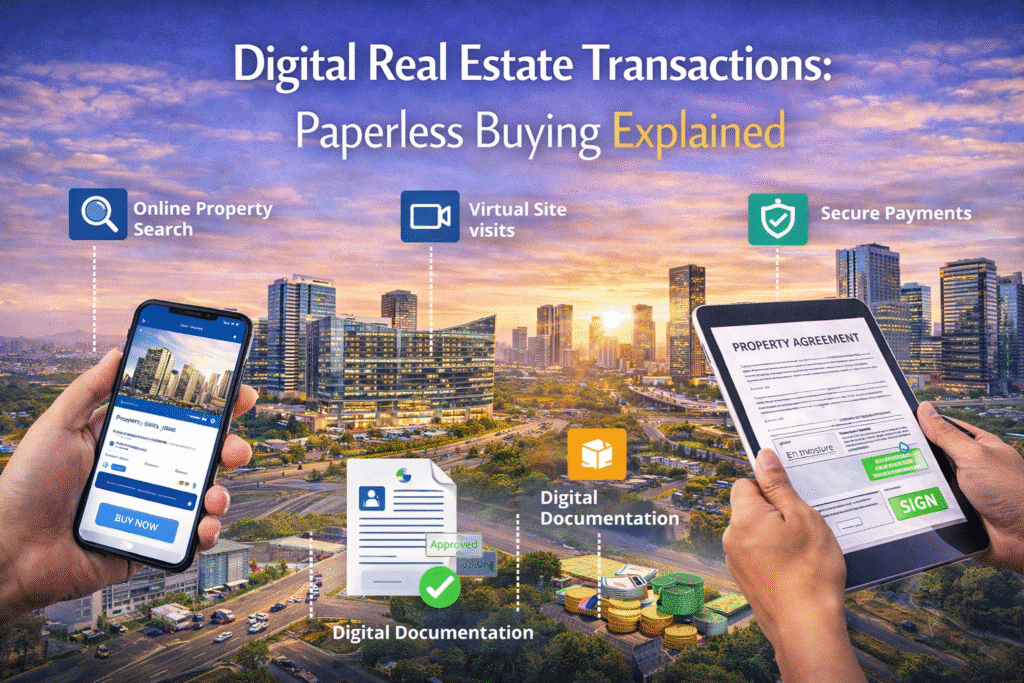
Digital Real Estate Transactions: Paperless Buying Explained
The Indian real estate sector is undergoing a major transformation. In 2026, digital real estate transactions and paperless property buying are no longer future concepts—they are fast becoming the new normal. From online property searches to e-signatures and digital registrations, technology is making property buying faster, safer, and more transparent.
This blog explains digital real estate transactions, how paperless buying works, and why it is reshaping the way Indians buy property.
What Are Digital Real Estate Transactions?
Digital real estate transactions refer to the use of technology-driven, paperless processes throughout the property buying journey, including:
Online property discovery
Virtual site visits
Digital documentation
E-signatures
Online payments
Digital registration (where permitted)
The goal is to reduce paperwork, increase transparency, and improve buyer convenience.
Why Paperless Property Buying Is Growing in India
1. Convenience & Speed
Digital processes eliminate repetitive paperwork and in-person visits.
Faster documentation
Quicker deal closures
Easy access to records anytime
This saves time for both buyers and sellers.
2. Improved Transparency & Trust
Digital platforms allow buyers to:
Verify property details online
Check RERA registrations
Track transaction stages digitally
This reduces fraud and misinformation—key concerns in traditional real estate transactions.
3. Secure Digital Payments
Online payment systems ensure:
Traceable transactions
Reduced cash dependency
Faster fund transfers
This aligns with India’s push towards a cashless and compliant economy.
Key Components of Paperless Real Estate Buying
✔ Online Property Search & Shortlisting
Buyers can compare prices, locations, and projects digitally, making informed decisions without physical visits initially.
✔ Virtual Site Visits & Video Walkthroughs
High-quality videos, drone shots, and 3D tours allow buyers—especially NRIs—to explore properties remotely.
✔ Digital Documentation
Documents such as:
Agreement to sell
Allotment letters
Payment receipts
are shared and stored securely in digital format.
✔ E-Signatures & Digital Verification
E-sign and Aadhaar-based verification reduce dependency on physical presence and speed up approvals.
✔ Online Property Registration (Where Applicable)
Several states now offer partial or full online registration systems, reducing visits to sub-registrar offices.
Role of PropTech in Digital Transactions
PropTech (Property Technology) platforms are powering this transformation by offering:
AI-based property recommendations
Blockchain-backed transaction security
CRM-based deal tracking
Data-driven pricing insights
These innovations are making real estate more organized and buyer-friendly.
Benefits of Digital Real Estate Transactions
For Buyers:
Faster buying process
Lower paperwork stress
Greater transparency
Remote buying convenience
For Sellers & Developers:
Wider buyer reach
Faster closures
Reduced operational costs
Better record management
Are Digital Transactions Safe?
Yes—when done through:
RERA-registered projects
Trusted platforms
Verified payment gateways
Digital transactions in real estate are secure, traceable, and legally valid, especially when combined with professional advisory support.
Challenges & Limitations
Despite rapid adoption, some challenges remain:
State-wise variation in digital registration
Need for buyer awareness
Dependence on internet & digital literacy
However, these gaps are narrowing quickly.
Digital Real Estate & NRIs
Paperless buying has been a game-changer for NRIs:
End-to-end buying without travel
Digital POA & documentation
Easier property management
This has significantly boosted NRI participation in Indian real estate.
Future of Digital Real Estate Transactions
By 2026 and beyond, we can expect:
Fully online property registration across states
Blockchain-enabled title verification
AI-driven pricing and valuation
Seamless end-to-end digital ownership transfers
Digital real estate is moving towards a one-click, paperless ecosystem.
Final Thoughts
Digital real estate transactions and paperless buying are redefining property ownership in India. They bring speed, transparency, security, and convenience—making real estate more accessible than ever.
For buyers in 2026, understanding and embracing digital processes is no longer optional—it’s a smart move towards safer and more efficient property ownership.