

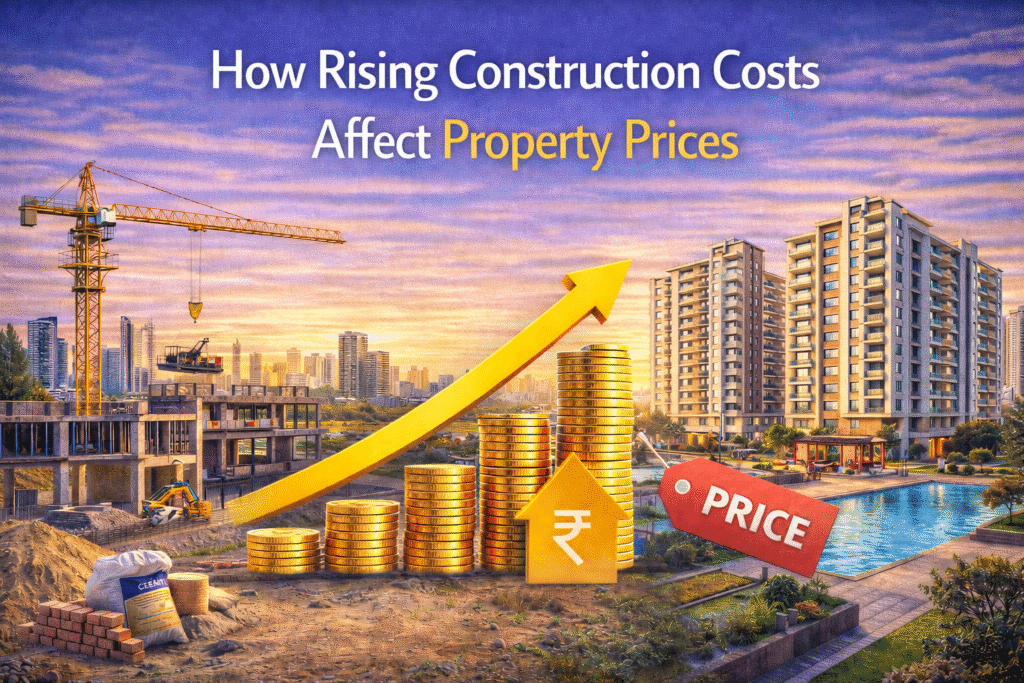
How Rising Construction Costs Affect Property Prices
Rising construction costs have become one of the most influential factors shaping property prices in India. In 2026 and beyond, buyers, investors, and developers are all feeling the impact of increasing input costs—from raw materials to labour and compliance.
This blog explains how rising construction costs affect property prices, why this trend is likely to continue, and what it means for homebuyers and real estate investors.
What Are Construction Costs?
Construction costs include all expenses involved in building a property, such as:
Cement, steel, bricks, and sand
Labour and skilled workforce
Machinery and technology
Land development and approvals
Compliance, safety, and sustainability requirements
Any increase in these components directly influences the final selling price of property.
Why Construction Costs Are Rising
1. Increase in Raw Material Prices
Steel, cement, aluminium, and fuel prices have risen due to:
Global supply chain disruptions
Higher energy costs
Import dependency and currency fluctuations
Since materials form a major part of project cost, even small hikes significantly affect pricing.
2. Labour Shortages & Higher Wages
Urban construction depends heavily on skilled and semi-skilled labour.
Migration patterns
Rising wage expectations
Skill shortages
These factors increase per-square-foot construction costs.
3. Higher Compliance & Regulatory Costs
Modern projects must comply with:
RERA norms
Green building standards
Fire & safety regulations
Environmental clearances
While these improve quality and transparency, they also add to overall project cost.
4. Adoption of Better Quality & Technology
Buyers now demand:
Better construction quality
Smart home features
Sustainable materials
These upgrades increase construction expenses but also raise property value.
How Rising Construction Costs Impact Property Prices
1. Increase in Base Property Prices
When construction costs rise, developers are forced to:
Increase base prices
Reduce discounts
Phase price hikes across construction stages
This directly raises the entry price for buyers.
2. Fewer Price Corrections in the Market
Higher input costs make it difficult for developers to reduce prices, even during slowdowns. As a result:
Property prices become more stable
Sharp price drops are unlikely
Holding power increases for developers
3. Early Buyers Benefit the Most
Projects launched earlier at lower construction costs:
Offer better value
See faster appreciation
Become more attractive in resale
This is why buying early in a project cycle often pays off.
4. Premium & Quality Projects Gain Advantage
Low-quality construction is no longer acceptable to buyers.
Projects with:
Strong construction standards
Reputed developers
Better materials
justify higher prices and see stronger demand.
Impact on Affordable vs Premium Housing
Affordable Housing
Margins are tight
Cost increases are partially absorbed by developers
Government support helps control pricing
Smaller units reduce per-unit cost
Price impact is moderate but steady.
Premium & Luxury Housing
Cost increases are passed on more easily
Buyers focus more on quality than price
Larger homes amplify cost impact
Premium segments often see faster price escalation.
What This Means for Homebuyers
For buyers, rising construction costs mean:
Waiting longer usually means paying more
Under-construction projects become more attractive early
Ready-to-move homes get priced higher due to replacement cost
Buying sooner often results in better value.
What This Means for Investors
For investors, higher construction costs:
Create a natural floor for property prices
Support long-term capital appreciation
Reduce downside risk
Real estate becomes a strong hedge against inflation.
Rising Construction Costs & Rental Market
Higher property prices also affect rentals:
Higher capital value → higher expected rents
New supply comes at higher cost
Rental rates gradually move upward
This benefits rental property investors over time.
Will Construction Costs Come Down?
In the long term:
Minor fluctuations are possible
But structural factors like wages, compliance, and sustainability will keep costs elevated
This makes real estate prices structurally upward-biased.
Final Thoughts
Rising construction costs play a direct and lasting role in increasing property prices. While this may seem challenging for buyers, it also strengthens real estate as a stable, inflation-resistant asset.
For smart buyers and investors, the key takeaway is simple:
👉 Delaying a purchase often means paying more later
👉 Early decisions in quality projects create long-term value
Understanding this cost-price relationship helps you make timely and informed real estate decisions.