

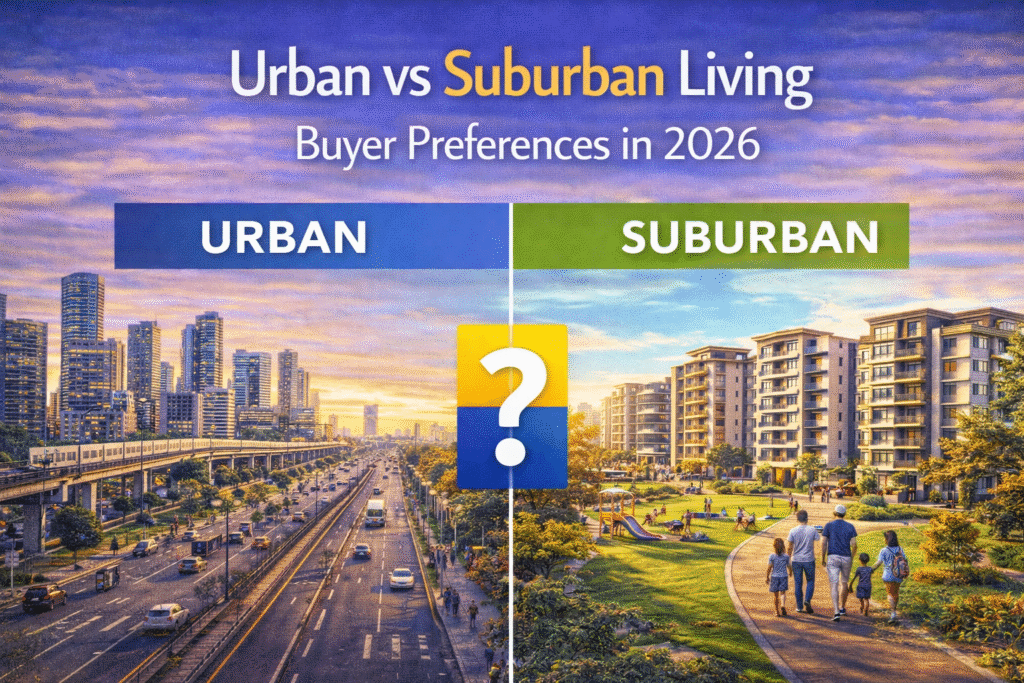
Urban vs Suburban Living: Buyer Preferences in 2026
The real estate market in 2026 is witnessing a clear shift in how buyers choose where to live. The traditional debate of urban vs suburban living has evolved beyond location—it now reflects lifestyle choices, work patterns, affordability, and long-term priorities.
So, what are buyers really preferring in 2026? Let’s explore urban vs suburban living buyer preferences and understand which option makes more sense today.
Changing Buyer Mindset in 2026
Today’s buyers are more informed and value-driven. Factors influencing preferences include:
Hybrid & remote work culture
Rising property prices in city centers
Need for larger homes and open spaces
Focus on safety, community, and wellness
Improved connectivity to suburban areas
As a result, both urban and suburban markets are thriving—but for different reasons.
Urban Living: Why Buyers Still Choose Cities
Urban living continues to appeal to a specific segment of buyers in 2026.
Key Reasons Buyers Prefer Urban Living
1. Proximity to Work & Business Hubs
City centers offer:
Shorter commute times
Easy access to offices and commercial zones
Strong professional networking opportunities
This is especially attractive to young professionals and entrepreneurs.
2. Established Social Infrastructure
Urban areas provide:
Top schools & hospitals
Malls, restaurants & entertainment
Public transport & metro connectivity
Convenience remains the biggest strength of urban living.
3. Strong Rental Demand & Liquidity
Urban properties enjoy:
High rental demand
Faster resale
Consistent tenant turnover
This makes cities attractive for rental-focused investors.
Challenges of Urban Living
High property prices
Smaller home sizes
Congestion & pollution
Limited open spaces
These drawbacks are pushing many buyers to explore alternatives.
Suburban Living: The Rising Preference in 2026
Suburban living has emerged as a strong favorite among families and end-users.
Why Buyers Prefer Suburban Living
1. More Space at Better Prices
Suburban areas offer:
Larger homes
Better layouts
More value for money
Buyers can upgrade their lifestyle without overstretching budgets.
2. Gated Communities & Lifestyle Amenities
Suburbs are leading in:
Gated developments
Green landscapes
Clubhouses & wellness zones
Safer environments
This appeals strongly to families, seniors, and NRIs.
3. Improved Connectivity
Infrastructure upgrades have changed the game:
Expressways
Metro extensions
Better road networks
Commute times are reducing, making suburban living more practical.
4. Health, Wellness & Community Living
Post-pandemic priorities have made:
Open spaces
Low-density living
Community interaction
key decision factors—areas where suburbs clearly outperform cities.
Urban vs Suburban: 2026 Buyer Comparison
| Factor | Urban Living | Suburban Living |
|---|---|---|
| Property Prices | Very High | More Affordable |
| Home Size | Compact | Spacious |
| Lifestyle | Fast-paced | Balanced & calm |
| Rental Demand | High | Growing |
| Open Spaces | Limited | Abundant |
| Family-Friendly | Moderate | High |
| Appreciation | Stable | High (long-term) |
Who Should Choose Urban Living?
Urban living makes sense if you:
Work in city business districts
Prefer walk-to-work lifestyle
Value convenience over space
Invest primarily for rental income
Have a high budget
Who Should Choose Suburban Living?
Suburban living is ideal if you:
Are buying for end-use
Want larger homes & amenities
Have a family or plan to start one
Work hybrid or remotely
Seek long-term appreciation
Hybrid Buyer Trend: Best of Both Worlds
In 2026, many buyers adopt a hybrid strategy:
Rent in urban areas for work convenience
Buy in suburbs for long-term living or investment
This approach balances lifestyle, affordability, and wealth creation.
Impact on Real Estate Prices & Demand
Urban markets remain stable and premium-driven
Suburban markets are growth-driven and end-user dominated
Gated communities in suburbs outperform standalone urban buildings
Infrastructure-led suburbs see faster appreciation
Final Thoughts
In 2026, the choice between urban vs suburban living is no longer about compromise—it’s about alignment with lifestyle goals.
✔ Urban living offers convenience, vibrancy, and rental strength
✔ Suburban living delivers space, security, community, and future growth
The smartest buyers are those who choose where they live based on how they want to live.