

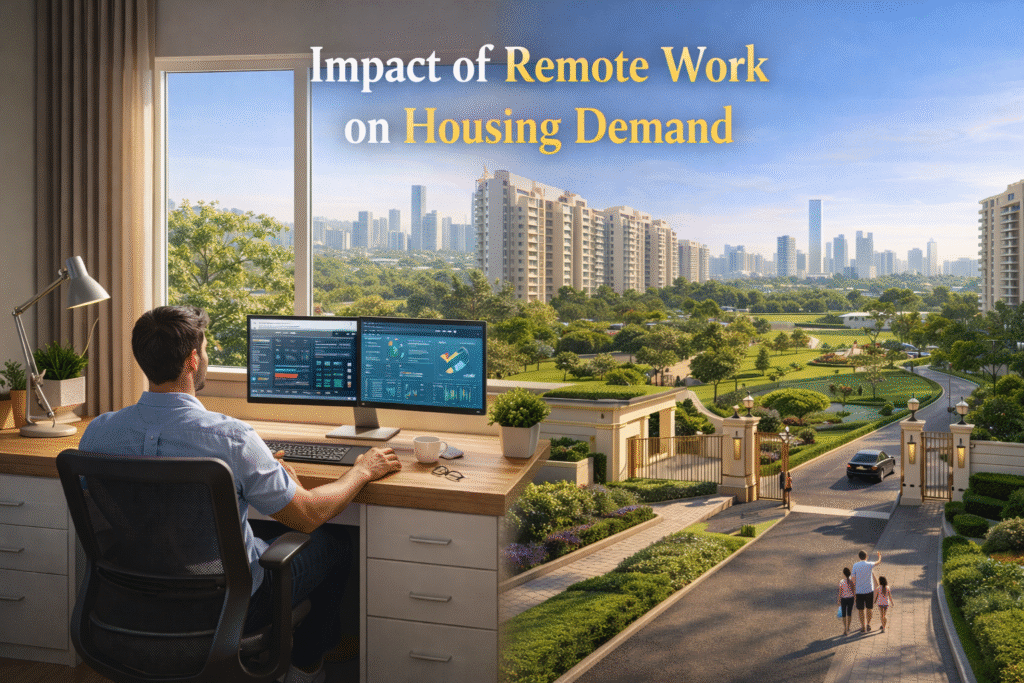
Impact of Remote Work on Housing Demand
Remote work is no longer a temporary shift—it has become a permanent part of modern work culture. As companies continue to offer hybrid and work-from-home models in 2026, the impact on housing demand across India has been significant. Homebuyers today are rethinking where they live, how much space they need, and what amenities truly matter.
Let’s understand how remote work has reshaped housing preferences and real estate demand.
1. Shift from Location-Centric to Lifestyle-Centric Living
Earlier, proximity to offices was the primary factor in home buying. With remote work reducing daily commute requirements, buyers are now prioritising:
Larger homes
Better surroundings
Improved quality of life
People are willing to move slightly away from city centres if they get more space, greenery, and better pricing.
2. Rising Demand for Larger Homes
Work-from-home has created a strong demand for:
Extra bedrooms
Dedicated home offices
Study rooms or flexible spaces
Buyers now prefer 2.5 BHK or 3 BHK homes over compact layouts, even if it means a slightly higher budget. Space has become a necessity, not a luxury.
3. Growth of Suburban & Peripheral Locations
Remote work has accelerated demand in:
Suburban areas
Emerging corridors
Peripheral city locations
In regions like Gurgaon, areas with good road connectivity, upcoming metro access, and modern infrastructure are witnessing increased buyer interest due to better affordability and lifestyle value.
4. Increased Preference for Gated Communities
With more time spent at home, buyers want:
Security
Open green spaces
Wellness amenities
Recreational facilities within the society
Gated communities offering work-friendly environments, high-speed internet infrastructure, and lifestyle amenities are becoming the top choice for remote professionals.
5. Strong Demand for Affordable & Mid-Segment Housing
Remote work has also boosted demand for affordable and mid-segment housing, especially among young professionals and first-time buyers. Lower commuting costs and flexible work locations allow buyers to invest in homes that offer better value rather than just central locations.
This has improved sales velocity in budget-friendly residential projects.
6. Rental Market Transformation
The rental market has also adapted:
Tenants prefer larger units
Demand has shifted from micro-apartments to spacious homes
Locations with peaceful environments and amenities are gaining popularity
Landlords owning well-planned properties are seeing better tenant retention and stable rental income.
7. Long-Term Impact on Real Estate Investment
Remote work has created a more balanced real estate demand across cities and regions. Investors are now focusing on:
Growth corridors
Well-connected suburbs
Projects with future infrastructure potential
This shift has reduced over-dependence on central business districts and opened new opportunities for long-term appreciation.
Conclusion: Remote Work Is Redefining Housing Demand
The rise of remote work has fundamentally changed how people choose their homes. Space, comfort, flexibility, and lifestyle have replaced commute distance as top priorities. As work-from-home continues in 2026 and beyond, housing demand will remain strong for thoughtfully designed homes in well-connected, lifestyle-driven locations.
At Sapphirre Realty, we help buyers and investors identify properties that align with modern work patterns and future-ready living—because homes should support both life and work.