

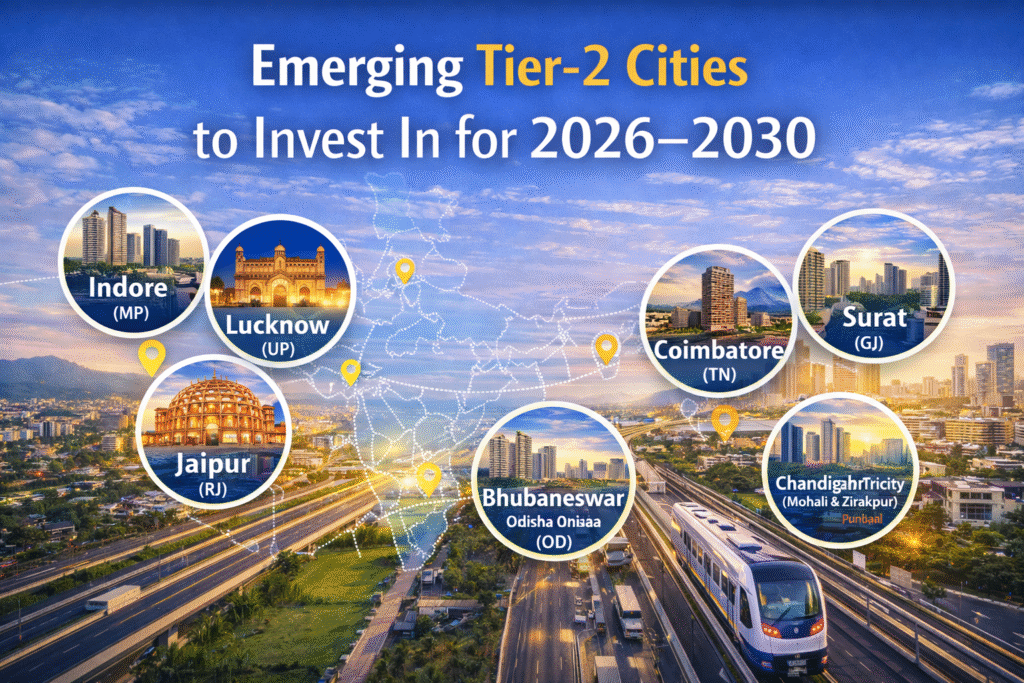
Emerging Tier-2 Cities to Invest In for 2026–2030
As property prices in Tier-1 cities continue to rise, investors are increasingly shifting focus to India’s Tier-2 cities. Between 2026 and 2030, these cities are expected to deliver strong capital appreciation, improving rental yields, and long-term growth—driven by infrastructure development, job creation, and urban migration.
If you’re planning smart real estate investments for the next decade, here’s a detailed look at the top emerging Tier-2 cities to invest in for 2026–2030.
Why Tier-2 Cities Are the Next Big Opportunity
Tier-2 cities offer the perfect balance of affordability, growth potential, and livability.
Key reasons investors are bullish:
Lower entry prices compared to metros
Rapid infrastructure development
Government focus on smart cities
Expanding IT, manufacturing & startup ecosystems
Rising housing demand from local professionals
These cities are transitioning from regional hubs into future urban powerhouses.
1. Indore (Madhya Pradesh)
Indore continues to rank high on livability and cleanliness, making it a strong long-term bet.
Why invest:
Consistent infrastructure upgrades
Growing commercial & educational ecosystem
Affordable residential prices
High end-user demand
Best for: Long-term appreciation & end-use investment
2. Lucknow (Uttar Pradesh)
Lucknow is rapidly transforming into a major real estate destination in North India.
Growth drivers:
Metro expansion & expressway connectivity
IT parks and commercial zones
Smart city initiatives
Rising demand for gated communities
Best for: Early-stage investors seeking appreciation
3. Jaipur (Rajasthan)
Jaipur’s real estate market is evolving beyond tourism.
Key advantages:
Industrial corridors & SEZs
Strong road & airport connectivity
Growth in education and IT sectors
Increasing demand for plotted developments & villas
Best for: Mixed-use and residential investments
4. Coimbatore (Tamil Nadu)
Coimbatore has emerged as a preferred city for professionals and retirees alike.
Why Coimbatore stands out:
Manufacturing & textile industry base
Pleasant climate & quality lifestyle
High demand for independent homes
Stable rental market
Best for: Rental income and end-use properties
5. Bhubaneswar (Odisha)
Bhubaneswar is quietly becoming an eastern India real estate hotspot.
Growth factors:
Smart city development
IT & government employment hubs
Affordable property prices
Increasing migration from nearby regions
Best for: Budget-friendly long-term investments
6. Chandigarh Tricity (Mohali & Zirakpur)
The Tricity region is seeing rapid real estate expansion.
Investment appeal:
Strong demand from IT professionals
Excellent social infrastructure
Premium gated community developments
Stable appreciation trend
Best for: Residential apartments & rental income
7. Surat (Gujarat)
Surat’s strong industrial economy makes it a solid Tier-2 investment destination.
Why investors are interested:
Diamond & textile industry dominance
Rising commercial activity
Infrastructure-driven growth
Affordable housing demand
Best for: Commercial & residential investment
Key Trends Shaping Tier-2 City Growth (2026–2030)
Expansion of highways, airports & rail connectivity
Rise of remote & hybrid working culture
Growth of affordable and mid-segment housing
Demand for gated communities & lifestyle projects
Increased institutional and developer interest
Investment Strategy for Tier-2 Cities
To maximize returns:
Enter early in developing micro-markets
Focus on infrastructure-backed locations
Prefer reputed developers
Invest with a 5–10 year horizon
Balance between rental yield and appreciation
Tier-2 Cities vs Tier-1 Cities
| Factor | Tier-1 Cities | Tier-2 Cities |
|---|---|---|
| Entry Cost | Very High | Affordable |
| Growth Potential | Moderate | High |
| Rental Yield | Stable | Improving |
| Risk Level | Lower | Moderate |
| Long-Term ROI | Slower | Faster |
Final Thoughts
Between 2026 and 2030, Tier-2 cities will be the biggest real estate growth engines in India. Investors who act early can benefit from lower acquisition costs, strong appreciation, and rising rental demand.
Whether you’re a first-time investor or looking to diversify beyond metro cities, Tier-2 markets offer compelling opportunities with long-term rewards.