

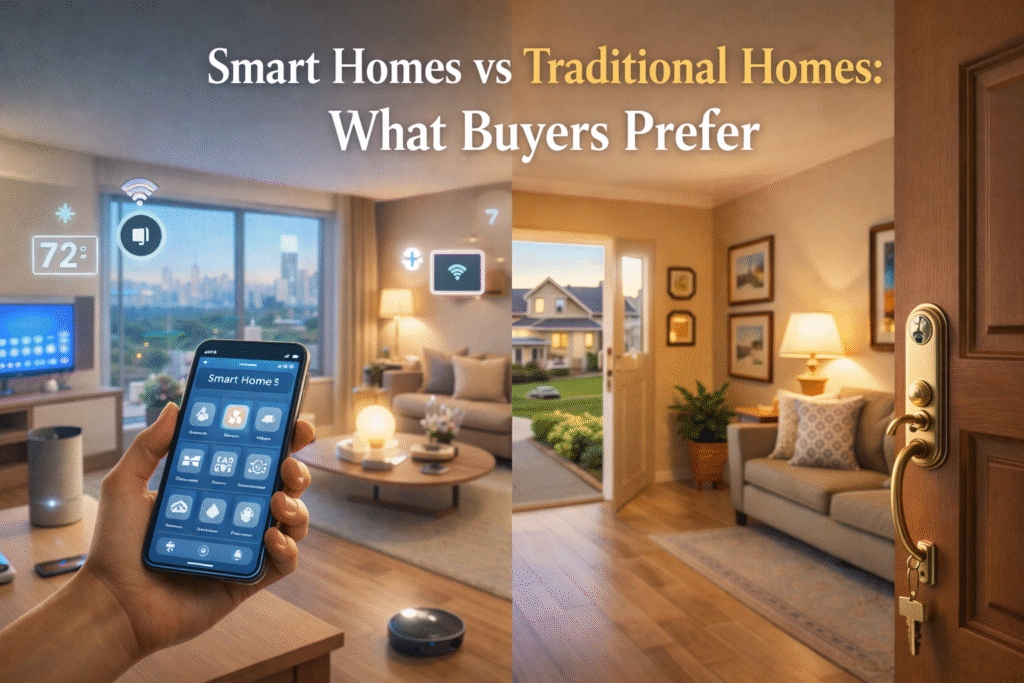
Smart Homes vs Traditional Homes: What Buyers Prefer in 2026
The Indian housing market is evolving rapidly with technology reshaping how people live. As we move through 2026, buyers are increasingly comparing smart homes with traditional homes to decide which better suits their lifestyle, comfort, and long-term investment goals.
So, what do buyers really prefer today? Let’s break it down.
Understanding Smart Homes and Traditional Homes
Smart Homes are equipped with automated systems that control lighting, security, climate, and appliances through mobile apps or voice commands.
Traditional Homes focus on conventional layouts and manual operations without integrated automation, relying more on location, construction quality, and price.
Both have their own appeal—but buyer preferences are clearly shifting.
1. Convenience & Automation
Smart homes offer unmatched convenience:
App-controlled lighting & appliances
Smart locks and video door phones
Automated climate control
Voice-enabled home systems
Buyers in 2026 value time-saving and hassle-free living, making smart homes particularly attractive to professionals and tech-savvy families.
Traditional homes, while simple and familiar, lack this level of ease.
2. Safety & Security
Security plays a crucial role in buying decisions.
Smart Homes Provide:
Smart CCTV & motion sensors
Remote door access
Real-time security alerts
Traditional homes rely on manual locks and external security systems, which many buyers now consider outdated.
As a result, smart security features have become a strong buying advantage.
3. Energy Efficiency & Cost Savings
Smart homes help reduce electricity and water consumption through:
Automated lighting
Smart thermostats
Energy monitoring systems
With rising utility costs, buyers are attracted to homes that offer long-term savings and sustainability. Traditional homes often lack energy optimisation features unless upgraded later.
4. Lifestyle Appeal & Modern Living
Smart homes align with modern lifestyles:
Seamless integration with work-from-home setups
Customised living environments
Tech-enabled comfort
For young buyers and nuclear families, smart homes feel future-ready. Traditional homes still appeal to buyers who prefer simplicity or have budget constraints, but the lifestyle gap is growing.
5. Resale Value & Future Readiness
From an investment perspective:
Smart homes enjoy higher resale demand
Tech-enabled properties attract premium tenants
Future upgrades are easier
Traditional homes may require additional investment to stay competitive in the resale or rental market.
6. Cost Comparison: Smart vs Traditional
While smart homes may have a slightly higher initial cost, buyers now see it as value-driven pricing rather than an expense. Many developers are offering smart features as standard, making them more accessible even in mid-segment housing.
Traditional homes remain popular in budget-focused segments but are gradually losing preference among urban buyers.
7. What Buyers Prefer in 2026
Buyer preference trends clearly indicate:
End-users prefer smart homes for comfort & security
Investors prefer smart homes for rental & resale potential
Senior buyers may still choose traditional homes for familiarity
Overall, demand for smart homes is growing faster across metros and emerging urban corridors.
Conclusion: Smart Homes Are Leading Buyer Preference
In 2026, smart homes are no longer a luxury—they are becoming a standard expectation. While traditional homes still have relevance in certain segments, the shift toward technology-driven living is undeniable.
At Sapphirre Realty, we help buyers choose between smart and traditional homes based on their lifestyle, budget, and long-term goals—ensuring every investment is future-ready and value-driven.